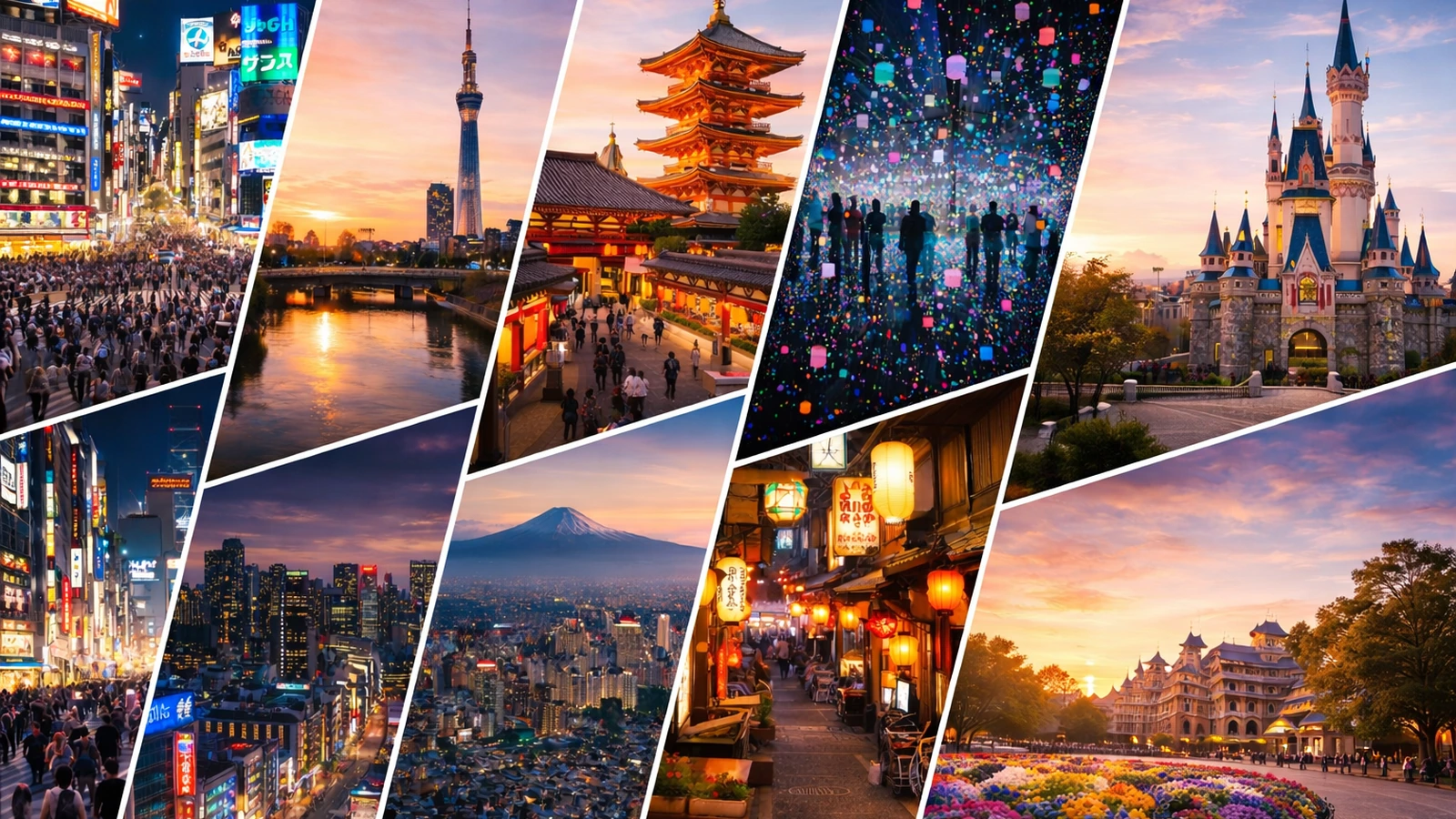
Tokyo Travel Guide
Best Things to Do in Tokyo for First-Time Visitors
Plan Tokyo the easier way: pick the right attractions, group your days by district, book the experiences that matter most, and skip the cross-city zig-zagging that wastes time.
Best for
First-timers, short trips, and cleaner booking decisions
Top anchors
teamLab, skyline decks, Disney, temples, and day trips
Planning angle
District clusters, timed-entry logic, and lower-friction routes
What to Prioritize in Tokyo First
A cleaner Tokyo attraction guide built for real trip planning.
Tokyo is easy to overplan. Between skyline decks, classic temple areas, Disney parks, immersive attractions, shopping districts, night neighborhoods, museums, and day trips, a simple list of highlights is not enough. What matters is what deserves advance booking, what fits together geographically, and what is actually worth your time on a short trip.
This guide is built for that decision. It helps you choose the best Tokyo attractions, compare the strongest first-time experiences, spot the easiest free sights, and decide what to reserve before you land. The goal is simple: help you build better days, then make booking the right pieces easier.
Smart Tokyo rule: one booked anchor plus one nearby district block usually gives you a better day than forcing four big sights in different parts of the city.
Build the Full Tokyo Trip, Not Just One Day
Use the connected pages below to make the whole trip feel easier on the ground.
The best Tokyo trips are not just about attractions. Your hotel base, transport setup, itinerary flow, and mobile data all affect how much you can actually enjoy each day.
Transport in Tokyo
Airport transfers, IC cards, metro logic, and day trip trains.
Move clean
Where to Stay in Tokyo
Pick the right base for Shinjuku, Shibuya, Asakusa, Ginza, and smarter daily flow.
Sleep smarter
Tokyo Itinerary Hub
2–3 days built around district clusters, realistic pacing, and lower-friction routes.
Copy the plan
Tokyo for First-Timers
What to book first, where to stay, and how to avoid overbuilding your days.
Start smart
Japan eSIM
Set up data fast, avoid roaming surprises, and keep maps and bookings working from day one.
Setup fast
Best habit: lock one major timed attraction first, then choose the hotel area and transport setup that make the rest of the route easier.
Jump to What Matters Most
Fast access to the sections people actually use before booking.
Quick Picks
The fastest way to decide what deserves a slot on your Tokyo trip.
Quick Comparison: What to Book, What to Keep Flexible
Use this to decide faster and avoid stacking too many paid anchors.
| Experience | Best for | Book ahead? | Trip fit |
|---|---|---|---|
| teamLab Planets Tokyo | One standout indoor attraction | Yes | Strong half-day anchor |
| SHIBUYA SKY | Sunset views and first-night energy | Yes | Easy add-on to Shibuya |
| Tokyo Skytree | East-side skyline planning | Recommended | Pairs well with Asakusa |
| Tokyo DisneySea | Full-day premium theme park | Yes | Full-day commitment |
| Senso-ji + Asakusa | Classic Tokyo atmosphere | No | Flexible morning block |
| Ghibli Museum | Animation fans and culture add-on | Yes | Works best if planned around it |
Fast takeaway: keep one or two ticketed anchors, then fill the rest with neighborhood blocks, temples, parks, and food areas nearby.
Why This Tokyo Guide Is More Useful Than a Generic List
Less random checklist, more planning value.
- Area-first logic: Tokyo works better by district clusters than by a giant city-wide attraction list.
- Booking clarity: the guide separates what truly needs advance tickets from what can stay flexible.
- Decision-friendly structure: quick picks, comparison tables, best-for sections, and realistic route logic.
- Broad intent coverage: attractions, free sights, night ideas, indoor options, and day trips in one place.
- Conversion without clutter: bookable recommendations are placed after useful context, not dumped without explanation.
Editorial angle: we focus on payoff, booking friction, district fit, weather flexibility, and how naturally each experience fits a real Tokyo day.
Build Your Tokyo Plan in 60 Seconds
Pick the route that matches your trip, then keep the rest simple.
One rule to remember: Tokyo punishes zig-zags. Keep your must-do experiences inside one zone before adding anything else.
Best Things to Do in Tokyo for First-Time Visitors
The strongest shortlist if you want iconic Tokyo without turning the trip into a blur.
Senso-ji + Asakusa
The easiest classic first stop. Go early, enjoy the temple area before the crowds thicken, and keep the rest of the morning nearby.
SHIBUYA SKY or Tokyo Skytree
Choose one skyline anchor, not both. SHIBUYA SKY fits better with a west-side afternoon and evening. Tokyo Skytree works better if you are already exploring Asakusa or east Tokyo.
teamLab Planets Tokyo
One of the highest-payoff modern attractions in Tokyo. It works best as a planned timed entry, not as a random filler between districts.
Shibuya + Harajuku + Meiji-area wandering
A great late afternoon and evening cluster when you want city energy, shopping, cafés, and strong street atmosphere.
Tokyo Disneyland or Tokyo DisneySea
These are full-day commitments. DisneySea is especially attractive if you want a more destination-style park experience rather than a quick city add-on.
Best pairing logic: one ticketed experience and one nearby neighborhood cluster is usually the sweet spot for a strong Tokyo day.
Top 10 Things to Do in Tokyo
A fast shortlist when you want the biggest hits first.
- teamLab Planets Tokyo — best immersive indoor experience
- SHIBUYA SKY — best sunset skyline deck
- Tokyo Skytree — best east-side skyline choice
- Senso-ji + Asakusa — classic first-time essential
- Shibuya Crossing + surrounding streets — pure Tokyo energy
- Tokyo Disneyland — best classic Disney day
- Tokyo DisneySea — best premium park day
- Harajuku + Meiji-area wandering — strong culture and shopping cluster
- Ghibli Museum — memorable cultural add-on
- Warner Bros. Studio Tour Tokyo — major themed indoor day
Tokyo Attractions to Book First
Start with the experiences that can shape the rest of your route.
Not every Tokyo highlight needs advance planning. These are the ones most likely to affect your itinerary, your timing, or your stress level if you leave them too late.
Booking order that works well: reserve your hardest-to-replace attraction first, then sort transport, passes, and arrival-day setup.
Must-book first
These are the strongest first choices if you want to lock high-demand experiences before the rest of the trip fills in.
Strong add-ons
These are better after your main anchor is already decided.
Transport and setup
Fixing these before arrival can save more friction than adding one more attraction.
Disclosure: TripGuidely may earn a commission if you book through some links on this page, at no extra cost to you.
Tokyo Booking Strategy
What really needs advance tickets, and what can stay flexible.
- Book your key anchor first: skyline decks, Disney parks, teamLab, and major themed attractions shape the rest of the day.
- Plan by district: one main area per half-day means less transit and more actual sightseeing.
- Leave buffer time: large stations, transfers, and queues often take longer than expected.
- Use weather logic: save indoor anchors like teamLab, Warner Bros. Studio Tour, and museums for weaker weather windows.
- Do not overload timed entries: one major timed attraction is often enough for a half-day in Tokyo.
Best booking sequence: reserve the hardest timed attraction first, then add transport, passes, airport transfer, and one weather-proof backup if needed.
Is It Worth Booking Tokyo Attractions in Advance?
Usually yes, but only for the experiences that actually protect your day.
Booking in advance is worth it when the attraction has fixed entry times, strong demand, or enough travel time around it that getting the timing wrong can derail the day.
For most travelers, pre-booking makes the most sense for skyline decks, Disney, teamLab, and a few themed attractions. It matters less for temple districts, parks, shopping streets, and many free neighborhood blocks.
Worth it for most people: teamLab, SHIBUYA SKY, Disney, and any experience you would be genuinely disappointed to miss.
Best Option for…
Use this if you already know what kind of Tokyo day you want.
Best Times to Visit Key Tokyo Experiences
Fast scanning, better timing, less wasted effort.
How to use this: pick one or two anchors from the table, then fill the rest of the day with nearby flexible stops.
| Experience | Best time | Book ahead? | Time needed | Area | Priority |
|---|---|---|---|---|---|
| teamLab Planets Tokyo | Morning / early afternoon | Yes | 1.5–2.5 hrs | Toyosu | Anchor |
| SHIBUYA SKY | Sunset / blue hour | Yes | 1–2 hrs | Shibuya | Anchor |
| Tokyo Skytree | Late afternoon / sunset | Recommended | 1.5–2.5 hrs | Sumida | Anchor |
| Tokyo Disneyland | Opening time | Yes | Full day | Maihama | Anchor |
| Tokyo DisneySea | Opening time | Yes | Full day | Maihama | Anchor |
| Warner Bros. Studio Tour Tokyo | Morning / midday | Yes | 3–5 hrs | Nerima | Upgrade |
| Ghibli Museum | Morning / early afternoon | Yes | 2–3 hrs | Mitaka | Upgrade |
| Asakusa (Senso-ji) | Early morning | No | 1.5–3 hrs | Asakusa | Flexible |
| Shibuya Crossing + streets | Late afternoon / evening | No | 2–4 hrs | Shibuya | Flexible |
| Fuji-Q Highland | Early start | Recommended | Full day | Outside Tokyo | Anchor |
Anchor
= book first, protects the whole day
Flexible
= fill gaps inside the same district
Upgrade
= stronger optional add-on
Best Areas and District Clusters for Tokyo Sightseeing
Choose one cluster per half-day and the itinerary instantly feels lighter.
Best Attractions in Tokyo
First-timer anchors, premium upgrades, and bookable picks that fit real trips.
teamLab Planets Tokyo
One of the best modern attractions in the city. It stands out most when treated as a planned timed entry rather than a leftover filler.
SHIBUYA SKY
The cleanest sunset skyline choice for many first-time visitors. It pairs naturally with Shibuya, dinner, and a stronger evening route.
Tokyo Skytree
A very strong skyline alternative with easier east-side pairing if your day already includes Asakusa or Sumida.
Tokyo Disneyland
Best for families and classic Disney fans. Treat it as a full-day commitment, not a casual add-on.
Tokyo DisneySea
The strongest premium park upgrade around Tokyo if you want a more distinctive destination-style Disney experience.
Warner Bros. Studio Tour Tokyo
A longer themed indoor attraction that works better on a dedicated day than inside a crowded central Tokyo route.
Ghibli Museum
A memorable cultural add-on for animation fans, but one that works best with advance planning and cleaner timing.
Senso-ji + Asakusa
The best flexible classic stop for many first-time visitors, especially early in the day before the area gets busier.
Want the fastest shortlist? Start with one skyline deck, one immersive indoor anchor, and one flexible district block.
Some results may contain affiliate links. If you book through them, TripGuidely may earn a commission at no extra cost to you.
Free Things to Do in Tokyo
Some of the best Tokyo moments cost nothing at all.
- Senso-ji and Nakamise area: best early-morning classic Tokyo walk.
- Meiji Shrine grounds: peaceful contrast to nearby Harajuku and Shibuya.
- Ueno Park: flexible for walking, museums nearby, and easy pairing with Asakusa.
- Shibuya Crossing + surrounding streets: one of the strongest free city-energy experiences anywhere.
- Harajuku and Omotesando wandering: strong for street scenes, shopping, and casual people-watching.
- Yanaka-style neighborhood walking: slower, more local atmosphere when you want a break from mega-district intensity.
Best use: pair one free neighborhood block with one booked attraction to keep both cost and transit under control.
Things to Do in Tokyo at Night
Tokyo gets better after dark when you choose the right area.
Shibuya
Best for energy, people-watching, shopping, skyline timing, and a strong first-night feel.
Shinjuku
Great when you want neon, food alleys, late-night atmosphere, and a more intense city mood.
Tokyo skyline decks
SHIBUYA SKY and Tokyo Skytree both work well near sunset and into blue hour when the city lighting improves the payoff.
Night food tours
Useful for travelers who want Tokyo atmosphere with more structure and less decision fatigue.
If you want something more unusual after dark, a Tokyo drift experience can be a strong add-on for travelers looking for nightlife energy beyond bars, observation decks, and food alleys.
Best night move: skyline deck at sunset, then dinner and street atmosphere in the same district.
Unique Activities & Experiences in Tokyo
Useful for rainy days, lighter half-days, and travelers who want Tokyo to feel more distinctive.
Once your main anchors are locked, this is where Tokyo becomes more flexible. Use unusual experiences to fill weak-weather windows, softer afternoons, or the gaps around a district you are already visiting.
Some results may contain affiliate links. If you book through them, TripGuidely may earn a commission at no extra cost to you.
Best Day Trips from Tokyo
When you want one strong change of pace beyond the city core.
Best rule: treat day trips as full-day anchors and keep the return evening light.
Best Tours in Tokyo
High-impact options when you want a lower-stress day with more structure.
Some results may contain affiliate links. If you book through them, TripGuidely may earn a commission at no extra cost to you.
Tips Before Booking
A few simple checks can save time, money, and route friction.
- Do not book too many timed entries in one day. One major timed attraction is often enough.
- Match the attraction to the district. A good booking is not just a good attraction, it is the right attraction for that day’s route.
- Keep a weather backup. Indoor attractions matter more in Tokyo when the forecast turns.
- Prioritize what would disappoint you most to miss. That is usually what deserves advance booking.
- Fix arrival logistics early. Airport transfer, transit card, and data setup can make the first day dramatically smoother.
Practical booking mindset: value first, convenience second, impulse extras last.
Common Tokyo Planning Mistakes
A few small fixes can make the entire trip feel much better.
- Trying to do too many districts in one day: Tokyo rewards clustering, not city-wide bouncing.
- Booking too many timed attractions: one or two strong anchors per day is usually enough.
- Underestimating transfer time: major stations, exits, and platform changes eat more time than many people expect.
- Treating Disney as a half-day stop: Disneyland and DisneySea both work best as full-day commitments.
- Waiting too long to book key experiences: SHIBUYA SKY, teamLab, and major themed attractions are easier when secured early.
- Ignoring arrival setup: airport transfer, transit card, and mobile data matter more than most first-time visitors think.
- Skipping rainy-day backups: Tokyo is easier when you already know your indoor alternatives.
2-Day Tokyo Itinerary Framework
Two tight days built around cleaner district flow.
Want a longer version? Add teamLab Planets, a Disney day, or one extra district block.
For the full route: Tokyo itinerary guide.
FAQ
Quick answers before you lock anything in.
What should I book first in Tokyo?
Book the attraction that would be hardest to replace if availability becomes limited. For many travelers, that means a skyline deck, Disney park, teamLab, or another timed attraction with a fixed slot.
How many days do you need in Tokyo?
Three days is a strong baseline for first-time visitors. Two days can still work well if you cluster districts and avoid stacking too many ticketed experiences.
Do I need to book attractions in advance?
Yes for skyline decks, Disney parks, teamLab, and some themed attractions. Many neighborhoods, temples, parks, and shopping areas can stay flexible.
What are the best free things to do in Tokyo?
Senso-ji and Asakusa walks, Meiji Shrine grounds, Ueno Park, Shibuya Crossing, and neighborhood wandering are some of the strongest free Tokyo experiences.
How do I avoid wasting time on transit?
Plan by district. One main area per half-day is usually the easiest rule. Avoid cross-city zig-zagging unless the second stop is clearly worth the transfer.
Do you use affiliate links?
Some links on this page are affiliate links. If you book through them, TripGuidely may earn a commission at no extra cost to you.
Keep Planning
Turn better attraction picks into better Tokyo days.
Tokyo transport
Airport options, IC cards, transit passes, and metro strategy.
Fix arrival
Where to stay in Tokyo
Pick the right base for your itinerary flow.
Location wins
Tokyo itinerary hub
2–3 days with district clusters and cleaner route logic.
Full plan
Tokyo on a rainy day
Indoor alternatives and weather-proof route ideas.
Backup plan
Tokyo drift experience
A more unusual Tokyo activity for travelers who want car culture, adrenaline, and a different side of the city.
Unique experience
Japan eSIM
Stay connected without roaming fees.
Setup fast