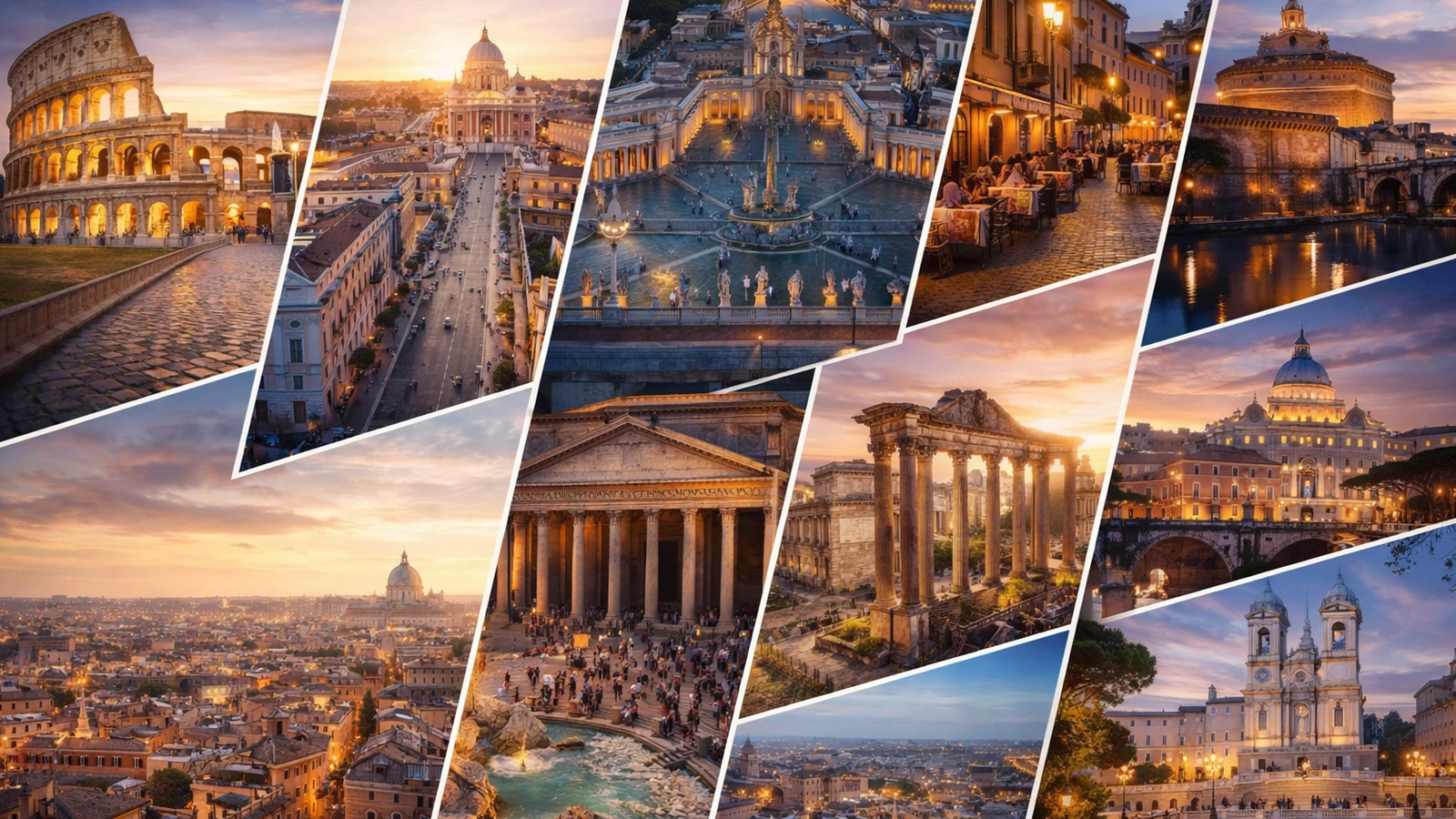
Rome Travel Guide
Best Things to Do in Rome
Plan the best things to do in Rome with a smarter mix of must-see attractions, timed-entry tickets, walkable sightseeing areas, and a few high-value extras that actually fit your trip.
Best for
First-timers, short trips, and cleaner attraction planning
Main anchors
Colosseum, Vatican, Pantheon, Trevi, Borghese, Trastevere
Planning angle
Book the hard stuff first, then fill with nearby flexible stops
What to Prioritize First in Rome
A practical Rome attraction guide built for real trip planning.
Rome is one of those cities where good planning changes everything. The best trip usually starts with two main anchors — usually the Colosseum and the Vatican Museums — then adds flexible highlights like the Pantheon, Trevi Fountain, Piazza Navona, and Trastevere around them.
This page is built to help you decide faster. Use it to compare the best Rome attractions, see what should be booked in advance, spot the highest-value extras, and avoid wasting time crossing the city too often. If you only have two or three days, one major timed attraction plus one nearby walkable area is usually the smartest structure.
Fast rule: one major timed attraction + nearby flexible sights usually works better than trying to squeeze the whole city into one day.
Need the full trip structure too? Use the Rome itinerary hub, Rome hotels guide, Rome transport guide, and Italy eSIM guide to make the rest of the plan easier.
Quick Picks
The fastest way to choose what to book first.
Best first-time sequence: book your Colosseum slot, book your Vatican slot, then decide whether your extra time goes to Pantheon, Borghese, Trastevere, or a day trip.
Ready to compare bookable options? Jump to the quick booking picks or go straight to the Rome 3-day itinerary if you want the cleanest default plan.
Plan Your Rome Trip
Use the full Rome cluster, not just one attraction page.
The best Rome trips feel simple on the ground: one key booking, one walkable area, and less unnecessary transit. Use the pages below to lock the rest of the trip before you start stacking extras.
Rome itinerary hub
All Rome itinerary options in one place.
Start here
Rome in 3 days
The best default structure for most first-time visitors.
Best overall
Rome for first-timers
What to book first, where to stay, and how to avoid common mistakes.
Plan smarter
Rome on a rainy day
Indoor routes, museum-heavy plans, and backup options when weather turns bad.
Backup plan
Transport in Rome
Airport transfers, train links, metro basics, and cleaner day-trip planning.
Move clean
Where to stay in Rome
Neighborhood picks based on your trip style and sightseeing priorities.
Sleep smarter
Italy eSIM
Set up data quickly and avoid roaming surprises after arrival.
Setup fast
Best Rome habit: secure your Colosseum and Vatican Museums first, then build the rest of each day around the nearest walkable area.
Quick Navigation
Jump straight to the sections that help most with planning and booking.
Why This Rome Guide Works Better
Less random list. More useful trip structure.
- Area-first planning: Rome is easier when you group attractions by walkable zones instead of chasing landmarks across the city.
- Low-friction booking logic: timed-entry anchors first, flexible sights second.
- Decision-friendly structure: quick picks, comparison tables, best-for sections, and itinerary shortcuts all in one place.
- Useful mixed intent coverage: this page helps with both planning and booking without turning into a cluttered ticket list.
- First-time focused: built for travelers who want the iconic Rome experience without wasting time or energy.
Editorial method: we prioritize walkability, booking friction, real-time decision value, and itinerary fit so the page is easier to use before and during a Rome trip.
Quick Rome Planning Guide
Pick your trip style, then take the shortest route to the right plan.
If you have 2 days
- Pick 2 anchors: Colosseum and Vatican Museums.
- Keep one main zone per half-day: Ancient Rome, Centro Storico, Vatican/Prati, or Trastevere.
- Avoid city-wide zig-zagging: it looks manageable on a map, but it drains time fast. Use the Rome 2-day itinerary if you want a tighter route.
If you have 3 days
- Day 1: Ancient Rome.
- Day 2: Vatican City.
- Day 3: Pantheon, central piazzas, Trevi, and a lighter evening finish. The Rome 3-day itinerary is the best default choice for most travelers.
If you want upgrades
- Culture upgrade: Borghese Gallery.
- Alternative indoor stop: crypts and catacombs.
- Low-effort sightseeing: golf cart tour.
- Full-day extension: Pompeii or Tivoli. If weather looks uncertain, keep the Rome rainy-day guide open as a backup.
One rule to remember: don’t build a Rome day around three neighborhoods just because they seem close on the map.
Best Things to Do in Rome for First-Time Visitors
The shortlist that gives you the classic Rome experience without unnecessary friction.
Colosseum + Roman Forum + Palatine Hill
This is Rome’s biggest must-book historical anchor. Give it a dedicated half-day and pair it with nearby Ancient Rome viewpoints or Monti rather than forcing another heavy museum right after it.
Vatican Museums + Sistine Chapel + St. Peter’s Basilica
This is the strongest art and faith cluster in the city. It works best when you keep the day on the Vatican side and avoid crossing Rome again in the middle of the afternoon.
Pantheon + Piazza Navona + Trevi Fountain
This is the easiest iconic central cluster. It works especially well for a lighter day, a first afternoon, or the flexible part of a longer itinerary.
Trastevere in the evening
One of the best areas for atmosphere, dinner, and low-pressure wandering after your main daytime sights are done.
Borghese Gallery
One of the best premium upgrades if you have more than two days and want one museum experience that feels more refined and less rushed.
Best pairing logic: Ancient Rome, Vatican, and Centro Storico each work better as separate sightseeing blocks than as one oversized day.
Quick Comparison
Use this table to decide faster what deserves a booking slot.
| Attraction | Best for | Time needed | Booking priority |
|---|---|---|---|
| Colosseum + Forum | Classic first-time Rome | 2.5–4 hrs | Highest |
| Vatican Museums | Art, history, iconics | 2.5–4 hrs | Highest |
| Pantheon | Easy central add-on | 45–75 min | Medium |
| Borghese Gallery | Refined museum upgrade | 1.5–2 hrs | Book ahead |
| Trastevere | Atmosphere and dinner | 2–4 hrs | Flexible |
| Pompeii / Tivoli | Longer trips only | Half-day to full day | After anchors |
Best decision shortcut: if it has a timed slot and can shape the whole day, book it first. If it’s flexible and nearby, use it to fill gaps.
Free and Iconic Things to Do in Rome
Some of Rome’s best moments do not need a ticket at all.
- Trevi Fountain: best very early or later in the evening.
- Piazza Navona: easy to combine with the Pantheon and central cafés.
- Spanish Steps: useful with the north-central / Borghese side of the city.
- St. Peter’s Square: still impressive even if you keep the day lighter.
- Trastevere walk: one of the easiest evening wins in Rome.
- Campo de’ Fiori and nearby streets: simple to add inside a Centro Storico route.
- Via dei Fori Imperiali walk: big visual payoff near the Ancient Rome zone.
- Villa Borghese park edges: good for slower pacing and breathing room.
The easiest way to use these is to layer them around your main bookings. Combine one booked anchor with one flexible cluster, then use the Rome transport guide and Rome hotels guide to reduce backtracking.
Quick Booking Picks
The fastest way to lock the bookings that matter most.
Booking logic: secure one Ancient Rome anchor, one Vatican anchor, then solve support attractions, transport, and extras after the main schedule-makers are set.
Must-book first
These are the strongest Rome bookings to secure early because they shape the rest of the itinerary.
🏛️ Colosseum + Roman Forum + Palatine Hill
🛡️ Colosseum arena tour
🎧 Colosseum guided tour
🎨 Vatican Museums + Sistine Chapel
⛪ St. Peter’s Basilica reserved access
Check availability early for the highest-demand slots. Limited availability can affect the whole day.
Strong add-ons
These work best after your main Rome anchors are already booked.
🏺 Pantheon ticket
🏰 Castel Sant’Angelo ticket
🖼️ Borghese Gallery
🕯️ Crypts and catacombs tour
🛺 Rome golf cart tour
See latest price and timing, then fit these around the part of Rome you are already visiting that day.
Day trips and transport
Book these after the core city highlights are under control.
Disclosure: TripGuidely may earn a commission if you book through some links on this page, at no extra cost to you.
What to Book in Advance
Rome gets easier when the highest-friction bookings are handled first.
- Book anchors first: Colosseum and Vatican Museums are the two biggest schedule-makers.
- Morning anchors usually work best: they reduce bottlenecks and leave the afternoon more flexible.
- Do not overstack the day: one heavy anchor per half-day is usually enough.
- Leave buffer: security, walking, basilica access, and transit all take longer than many travelers expect.
Best booking order: Colosseum → Vatican Museums → St. Peter’s / Pantheon → support attractions → day trips.
What to Book Ahead vs What Can Stay Flexible
Protect the hardest bookings first, then fill open space with easier nearby stops.
| Attraction | Booking need | Why | Best role in itinerary |
|---|---|---|---|
| Colosseum + Forum | Must book | Timed entry shapes the whole day | Main anchor |
| Vatican Museums | Must book | Popular morning slots go quickly | Main anchor |
| Borghese Gallery | Book ahead | Limited entry and fixed capacity | Upgrade anchor |
| Pantheon | Recommended | Useful for cleaner timing in the center | Support stop |
| Castel Sant’Angelo | Recommended | Easy to fit near a Vatican day | Support stop |
| Trevi Fountain | Flexible | No ticket, timing matters more than booking | Gap filler |
| Piazza Navona | Flexible | Easy to add on foot | Gap filler |
| Trastevere | Flexible | Best used for evening flow | Night layer |
Best Times to Visit Key Rome Attractions
Use this to shape better days with less friction.
How to use this: choose one or two anchors, then fill the rest of the day with flexible sights in the same part of the city.
| Attraction | Best time | Book ahead? | Time needed | Area | Priority |
|---|---|---|---|---|---|
| Colosseum + Forum | Opening time | Yes (timed) | 2.5–4 hrs | Ancient Rome | Anchor |
| Vatican Museums | Morning | Yes (timed) | 2.5–4 hrs | Vatican/Prati | Anchor |
| Pantheon | Morning | Recommended | 45–75 min | Centro Storico | Flexible |
| Castel Sant’Angelo | Morning / late afternoon | Recommended | 1.5–2.5 hrs | Vatican side | Flexible |
| Borghese Gallery | Morning | Yes (timed) | 1.5–2 hrs | Villa Borghese | Upgrade |
| Trevi Fountain | Early morning / late evening | No | 20–45 min | Centro Storico | Flexible |
| Piazza Navona | Late afternoon | No | 45–90 min | Centro Storico | Flexible |
| Trastevere | Evening | No | 2–4 hrs | Trastevere | Flexible |
Anchor
= book first, protects the whole day
Flexible
= fill gaps near your current neighborhood
Upgrade
= stronger optional add-on
Best Areas to Explore in Rome
Choose one area per half-day, then stack nearby sights around it.
Ancient Rome (Colosseum zone)
- Anchor: Colosseum + Forum + Palatine Hill
- Fill: Capitoline viewpoints, Via dei Fori Imperiali, Monti food stop
- Best for: first-timers and must-see history
Centro Storico (Pantheon → Navona → Trevi)
- Anchor option: Pantheon
- Fill: Trevi early or late, Piazza Navona, Campo de’ Fiori, cafés
- Best for: dense sightseeing with minimal transit
Vatican + Prati
- Anchor: Vatican Museums
- Fill: St. Peter’s Basilica, Castel Sant’Angelo, riverside walk
- Best for: one clean museum-heavy half-day
Villa Borghese / north-central layer
- Anchor: Borghese Gallery
- Fill: park edges, Spanish Steps side, calmer afternoon pacing
- Best for: longer stays and cultural upgrades
Trastevere
- Best time: late afternoon into evening
- Fill: scenic streets, dinner, bars, river crossing
- Best for: atmosphere, food, and relaxed wandering
Best Attractions in Rome
The bookable highlights and add-ons that actually improve a Rome trip.
Colosseum + Roman Forum + Palatine Hill
The main Ancient Rome anchor and usually the first ticket worth locking in. It is best used as a dedicated half-day rather than a quick stop between other heavy sights.
Vatican Museums + Sistine Chapel
The strongest museum anchor in Rome. Book a solid time slot, then keep the day on the Vatican side instead of building a cross-city schedule.
St. Peter’s Basilica
Best added to a Vatican day, not scattered randomly into another part of the itinerary.
Pantheon + Piazza Navona
The easiest central combo when you want high sightseeing value with low planning effort.
Castel Sant’Angelo
A very useful support attraction near Vatican City, especially if you want one more ticketed stop without adding too much complexity.
Borghese Gallery
One of the best upgrades for travelers who want something more curated, calmer, and more art-focused.
Crypts and catacombs
A good alternative when you want a darker, more unusual Rome layer or need an indoor change of pace.
Pompeii and Tivoli day trips
Best only after Rome’s core highlights are already secure. These fit better on a Rome 4-day itinerary or longer.
Before you book extras: secure the highest-friction attractions first, then compare the add-ons that match your pace and trip length.
Some results may contain affiliate links. If you book through them, TripGuidely may earn a commission at no extra cost to you.
Is It Worth Booking Rome Attractions in Advance?
Usually yes, but not everything deserves the same urgency.
Booking in advance is worth it in Rome when the attraction can shape the whole day. That is especially true for the Colosseum, Vatican Museums, and often Borghese Gallery. These are not just tickets — they are itinerary anchors.
Flexible sights like Trevi Fountain, Piazza Navona, and Trastevere do not need the same urgency. They are most useful when they stay open in your plan so you can fill time naturally without stress.
Worth it for most travelers: yes for major timed-entry attractions, less important for open-air highlights and evening neighborhoods.
Best Option For…
Use this if you want the fastest path to the right choice.
- Best for first-time visitors: Colosseum + Vatican + Pantheon + Trastevere.
- Best for a short Rome trip: Colosseum, Vatican, and one central walking cluster.
- Best for art lovers: Vatican Museums + Borghese Gallery.
- Best for a lighter day: Pantheon, Piazza Navona, Trevi, and Trastevere.
- Best for something different: crypts and catacombs or a golf cart tour.
- Best for longer stays: add Tivoli or Pompeii only after the city’s main anchors are covered.
Best overall balance: for most travelers, the sweet spot is two major booked anchors plus one or two flexible central clusters.
Unique Things to Do in Rome
Use these once the core highlights are already under control.
After the big icons are secured, Rome gets more interesting. This is where you can add moodier indoor stops, easier sightseeing, or experiences that make the trip feel less predictable.
Some results may contain affiliate links. If you book through them, TripGuidely may earn a commission at no extra cost to you.
Common Rome Planning Mistakes
A few small fixes can make the whole trip feel much easier.
- Trying to do Vatican and Colosseum too tightly together: both are heavy anchors and deserve buffer.
- Crossing the city too often: Rome works better in walkable areas than in landmark pinball.
- Booking too many timed entries in one day: it cuts flexibility and creates stress fast.
- Underestimating security and queue time: especially at major religious and archaeological sites.
- Leaving the biggest attractions too late: book the main anchors first, then fill around them.
- Ignoring the rest of the trip setup: arrival, hotel location, and connectivity matter more than many travelers expect. Use the transport guide, hotels guide, and Italy eSIM guide.
Tips Before Booking
A few smart choices now can save a lot of friction later.
- Book the attraction, not just the idea: decide whether you want standard entry, guided access, or a premium variation before checking out.
- Match the ticket to the day: a Vatican ticket belongs on a Vatican day, not squeezed into a central Rome day.
- Leave room around timed entries: Rome works better when the schedule breathes.
- Keep evenings lighter: Trastevere and central strolling work better than another museum late in the day.
- Solve transport and hotel location early: the wrong base can make good attraction choices feel harder than they should.
Best booking mindset: value first, then extras. Lock the attractions that protect your itinerary before spending time on optional add-ons.
Best Tours in Rome
High-impact experiences when you want less guesswork and cleaner days.
Best first-time tours
Colosseum guided tours and Vatican products are still the strongest choices for travelers who want better context and less decision fatigue.
Best cultural upgrades
Borghese Gallery is the cleanest museum upgrade. Catacombs and crypts work well when you want something more unusual and more atmospheric.
Best low-effort sightseeing
Golf cart tours and hop-on hop-off products can help when your legs need a break or the weather makes a long walking day less appealing.
Best day trips from Rome
Pompeii is the big dramatic option. Tivoli is calmer, more elegant, and easier to fit into a more relaxed cultural trip.
Some results may contain affiliate links. If you book through them, TripGuidely may earn a commission at no extra cost to you.
Choose the Right Rome Itinerary
Use this page to compare the options, then move into the itinerary that fits your trip length and pace.
Rome in 2 days
Fast highlights with strong anchor discipline.
Quick trip
Rome in 3 days
The best overall first-time structure.
Best overall
Rome in 4 days
More breathing room, stronger upgrades, and day-trip flexibility.
Calm upgrade
Rome for first-timers
What to book first, where to stay, and how to build a smoother trip.
Start smart
Rome on a rainy day
Indoor anchors, museum-heavy backups, and weather-proof options.
Stay dry
Best default choice: most travelers should start with the Rome 3-day itinerary and adjust from there.
FAQ
Quick answers before you book.
How many days do you need in Rome?
For most first-time travelers, 3 days is the best balance. With 2 days, keep the Colosseum and Vatican as your main anchors and stay disciplined on walkable zones.
Should you book the Colosseum in advance?
Yes. Timed-entry is one of the most important bookings in Rome, and the best slots can disappear quickly.
What’s the best time for the Vatican Museums?
Morning slots are usually the best choice. Leave buffer for security lines and avoid turning the day into a cross-city sprint.
What should you book first in Rome?
Most travelers should book the Colosseum and Vatican Museums first, then add St. Peter’s, the Pantheon, and other support attractions around those anchors.
What are the best extra attractions after the main highlights?
Many travelers add Castel Sant’Angelo, Borghese Gallery, catacombs, golf cart tours, or a day trip to Pompeii or Tivoli once the core Rome bookings are already secured.
Keep Planning
Turn strong attraction choices into better Rome days.
Rome transport
Airport transfers, metro basics, and rail day-trip planning.
Fix arrival
Where to stay in Rome
Neighborhoods based on your trip style and sightseeing priorities.
Location wins
Rome itinerary hub
All Rome itinerary options in one place.
Full plan
Rome for first-timers
Booking order, hotel zones, and cleaner first-trip planning.
First trip
Rome rainy-day guide
Indoor anchors, museums, and better backup routes.
Weather-proof
Italy eSIM
Stay connected without roaming surprises.
Setup fast